 If you practice mindfulness meditation, you’ve had this experience: you are focusing on your breath, one inhale and exhale at a time, when suddenly a compelling thought arises, distracting you. Maybe the thought is about work, or a relationship, or the vacation that starts next week, or whatever. That thought then leads you down a series of mental rabbit holes until – five minutes in – you realize that you’ve completely lost the breath. It can be humbling to realize how little control we have over our minds. Those thoughts are so compelling!
One powerful way of working with distracting thoughts is the simple technique of labeling. Whenever you notice that your mind has been wandering, silently say to yourself, thinking, thinking, or wandering, wandering. If you’ve been planning your day instead of noticing your breath, you can note planning, planning. If you’ve been remembering an event from yesterday, you can say remembering, remembering, and so on. Labeling our thoughts can have the effect of giving us some distance from them, leading to what I call “dis-identification.” We tend to identify with our thoughts and believe them to be true. Haven’t you noticed this in your own experience? Even if our thoughts are destructive, we give them credence because we are familiar with our mental patterns. That familiarity breeds an auto-pilot relationship to our thoughts. Because of this we tend to act on our thoughts without questioning or examining them. But when we label our thoughts in meditation, it’s as if we are freeing ourselves from the spell our thinking cast on us, as if we are waking up from a dream. We no longer believe the thought automatically. We see the thought merely as an event in consciousness. It may be an important thought that we need to act on; it may be a worthless thought that can be easily discarded. The important thing is that the act of labeling creates some space around our thoughts, allowing us to be aware of them and therefore giving us a choice about what thought to believe and act on and what thought to ignore.
This labeling technique also works with emotions. When we are feeling angry, we can note, angry, angry, or sadness, sadness, or desire, desire, etc. And labeling is something we can do even when we’re not meditating. It can be especially helpful during difficult conversations. If you’re talking politics with a close friend and you find yourself getting angry at an opinion your friend is sharing, acknowledging your anger can give you much needed separation and time to process the emotion. As a result you will probably be less likely to respond to your friend by saying something you might regret.
Research has shown that the inability to identify emotions makes it harder to regulate them.(1) Other research has shown that labeling emotions tends to lead to a lowering of stress levels.(2)
Keep the labeling simple. One word labels are best. The tone of your labeling is important as well. Simply note the bare experience without adding any emotional tone to it or any commentary. If you’re frustrated that you keep getting distracted by your thoughts, labeling THINKING! THINKING! impatiently will just make you feel bad about yourself.
Like just about any other meditation technique, mental labeling doesn’t always work. And it works better for some people than others. But it works often enough to be a useful addition to your meditation tool box.
Bill Scheinman is a mindfulness teacher and corporate mindfulness facilitator in the San Francisco Bay Area. His next 8-week class in mindfulness-based stress reduction starts Feb. 20 in Berkeley. He also offers online mindfulness courses which you can learn about here.
citations
1. Vine & Aldao, Journal of Social & Clinicial Psychology, April, 2014; 2. Craske, UCLA, 2012.
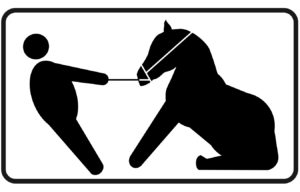 In meditation, when things don’t go our way, we tend to resist. Feeling restless? Then fidget incessantly as a way of not feeling the restlessness or what may be behind it. Have a hard time focusing on your breath? Then berate yourself as a bad meditator and despair at ever getting “good” at the practice.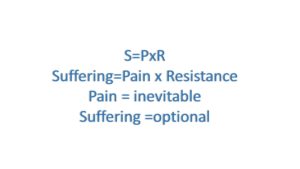

 You probably know the feeling. It’s after lunch and the day seems to drag on and on. Your energy level is low, and you can’t concentrate on your work. You aren’t getting anything done, and there doesn’t seem to be anything you can do about it. You feel like taking a nap, but of course that’s not possible at the office. The afternoon doldrums are a well-known challenge to the work day, with some 28% of employees reporting falling asleep or getting very sleepy at work, according to the National Sleep Foundation. But there are ways of working with this listlessness. Here are five ways to manage your energy during the afternoon:
 Many meditation teachers say that there is no wrong way to meditate. That showing up and doing the practice is what’s important. Having said that, the following list of common mistakes or misconceptions about meditation keep showing up in my teaching with students. They are:
 Rushing about seems to be the default way we live our lives. Interestingly enough, because we often rush ourselves, it’s hard to notice when other people rush. But during those times when we are more relaxed, or forced to stop, the signs of rushing are everywhere. On our roads and freeways, at work, in stores and on sidewalks, people seem to have just one speed. The speed of doing things fast. In fact, it can be quite jarring to see someone moving slowly, so accustomed are we to moving at a certain pace. How many times have you been parked at a red light and, as the light turns green, someone slowly crosses the street in front of your car? Chances are that was not a pleasant experience for you.
 When you’re working really hard and it’s time to take a break, what do you do? What does it mean to take a break? Is a break walking away from your desk while checking out your phone for messages, visiting Facebook for updates from friends, or browsing your favorite news blog? Is taking a break eating at your desk while web browsing? Or is it visiting a colleague to have a business conversation? Many people believe they have to be productive all the time, so even when they take a “break” they have to do something potentially useful. (A student of mine once confessed that when she brushed her teeth at night, she was texting friends with her free hand. She explained that brushing her teeth wasn’t accomplishing enough!) The problem with these kinds of breaks is that they keep the mind focused on conceptual experiences. But a true break means we are giving the brain a break from concepts. Brain scans have shown that when people are focused on concepts – doing work, for example – many regions of the bran light up. The brain is expending a lot of energy when we are doing things that take conceptual focus. When we expend this kind of energy without pause, hour after hour, it can be quite exhausting. When we are exhausted, our performance suffers, our inner sense of well-being declines, and our health can suffer as well. Burnout and lack of engagement often follow.


 Now that I am unplugged from my devices and to-do lists, I get to find out what my mind is really like. And who I really am.
 We are in communication with people all the time. We have conversations with colleagues at work, with our mechanic, with our spouses and kids, and we convey messages both verbally and non-verbally. But how often are we really being present while communicating? Because relationships can be stressful, it’s important to bring mindful awareness to the domain of communication.


 There is a trend towards minimalism in the dissemination of mindfulness. One does not really need practice mindfulness in an intensive way, we are told. We can do it in small digestible chunks. Some people suggest just 60 seconds of mindfulness practice. Or even one second. There are some that even suggest that formal practice periods are not needed at all – since we are already mindful now and then, the trick is to simply remember to be aware of what we are doing during our regular activities. If we could only remember to be aware more frequently, voila’ – we would be more mindful! I was struck by the following quote from a recent piece in the Harvard Business Review: